 FleetOS
Local SEO for Taxi Companies: The Complete 2026 Playbook
A step-by-step local SEO playbook for taxi, airport-transfer and chauffeur operators — Google Business Profile, route pages, reviews, and the AI-voice workflow that turns search traffic into confirmed bookings.
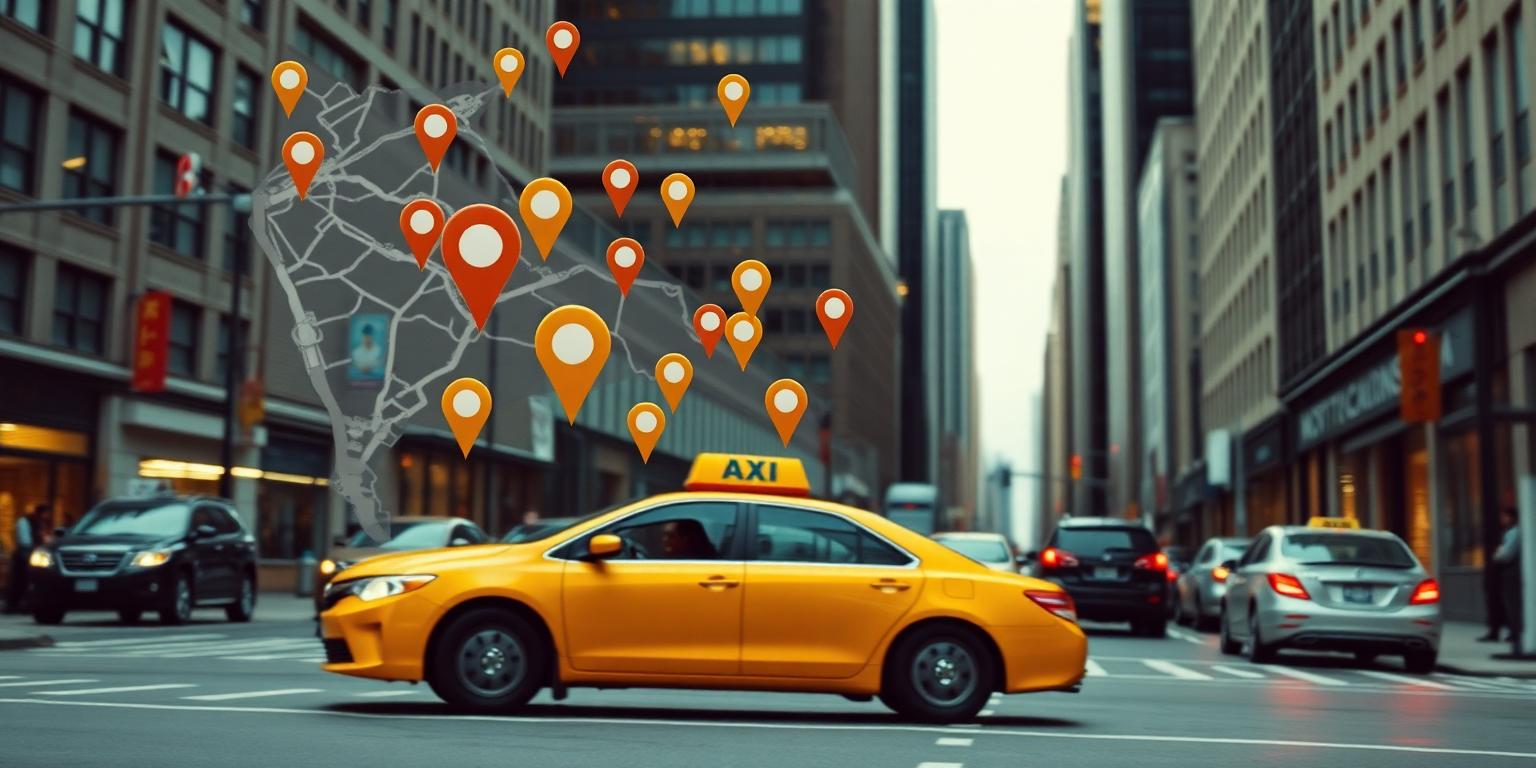
Local SEO for taxi companies is the single highest-ROI growth channel most operators ignore. When someone in your city searches 'taxi near me', 'airport taxi to JFK' or 'cab company [your city]', three results decide who gets the booking: the Google Map Pack, the top organic blue link, and — increasingly — the answer an AI assistant reads out loud. This playbook is how you win all three in 2026.
Why local SEO is different for taxi
Taxi search intent is hyper-local and hyper-urgent. People search on a phone, in motion, with a 60-second patience window. They don't read your About page — they look at your star rating, distance, and whether they can book in one tap. That changes everything about how you optimize: distance signals, review velocity, click-to-call, and instant booking widgets matter more than long-form content.
It's also different because the searcher's exact location is the ranking signal. You're not competing nationally; you're competing block-by-block. A cab company two miles away can outrank you for someone standing in your neighborhood — unless your local SEO is dialed in.
Step 1 — Own your Google Business Profile
This is non-negotiable. Claim the profile, pick the precise category (Taxi service, Airport shuttle service, Limousine service — pick the closest primary, add the others as secondary), set service-area polygons, and add every vehicle photo, interior photo, driver-in-uniform photo and logo asset you have. Profiles with 10+ recent photos rank measurably higher in the Map Pack.
Set your hours to 24/7 if you actually dispatch 24/7. Add 'online booking' and 'wheelchair accessible' attributes where true. Wire up call tracking so you know which bookings came from the profile.
Step 2 — Build one route page per pickup/dropoff pair
This is the unfair advantage. For every meaningful pickup/dropoff you serve, publish a dedicated page: 'Taxi from Downtown [City] to [Airport]', 'Airport transfer from [Airport] to [Suburb]', 'Cab from [Hotel district] to [Convention center]'. Each page gets a unique title, meta description, a clear price or fare estimator, an embedded map of the route, and a one-tap 'Book this trip' button.
Most incumbents have one generic 'services' page. You'll have 30, each targeted at a real search query, each ranking with almost no backlinks because the intent match is so strong.
Step 3 — Engineer review velocity, not just review count
Google rewards consistent, recent reviews more than a one-time pile. Trigger a review request the moment a trip completes — SMS with a one-tap link to your Google Business Profile review form. Aim for 4–8 new reviews per week, every week. Respond to every review (positive and negative) within 24 hours; that response signal also feeds rankings.
Never buy reviews. Google's spam detection in 2026 is brutal and a single suspension wipes out a year of work.
Step 4 — On-page basics that still matter
Title tags include city + service ('Taxi in [City] | 24/7 Cab Service | [Brand]'). Meta descriptions include phone number for a direct call from the SERP. Add LocalBusiness, TaxiService and FAQPage JSON-LD schema. NAP (Name, Address, Phone) must be identical across your site footer, Google Business Profile, Apple Maps, Bing Places, Yelp and every directory. Inconsistent NAP is the #1 reason small operators don't rank.
Step 5 — Win the AI Voice answer
When a rider asks Siri, Alexa, Google Assistant or ChatGPT for a taxi, the assistant returns a single answer. Voice-first SEO is the new battleground and it rewards three things: a clean Google Business Profile with current hours, structured FAQ markup on your site with the exact questions people ask out loud ('How much is a taxi from [Airport] to downtown?'), and an instant-booking endpoint the assistant can call.
This is where AI Voice changes the operations playbook. The whole point of AI Voice is making operations easier — chasing quotes, confirming bookings, tracking drivers, and keeping customers updated. An incoming voice booking should fire booking automation, send a booking confirmation by SMS/email, auto-assign the nearest driver, and log the contact into your CRM — all without a human dispatcher touching it. If your platform can't do that end-to-end loop, you'll get the search traffic but lose the conversion.
Step 6 — Local citations and directories
Submit identical NAP to: Apple Maps, Bing Places, Yelp, Yellow Pages, the local Chamber of Commerce, your city's tourism board, every airport's 'ground transportation' page, every major hotel concierge directory. Each of these is a small ranking signal individually; combined they move you up the Map Pack significantly.
Step 7 — Track what actually drives bookings
The metrics that matter: Map Pack impressions, profile-driven calls, profile-driven direction requests, organic clicks per route page, conversion rate from route page to completed booking, and review velocity. Vanity rankings without bookings are noise — wire every channel to your booking funnel so you optimize the right loop.
The 30-day quick start
Week 1: claim and fully fill out your Google Business Profile, add 20+ photos, fix NAP everywhere. Week 2: publish your 10 highest-volume route pages with schema. Week 3: turn on automated post-trip review requests and respond to every existing review. Week 4: add FAQ schema with the top 15 voice-search questions in your market and connect your AI Voice line to your dispatch + CRM. Most operators see Map Pack rankings move within 30 days and bookings within 60.
Ready to launch your branded fleet?
Spin up a white-label taxi or chauffeur business in one click — no setup fee, 14-day trial.
Keep reading
White-Label Taxi Dispatch Software: The Complete 2026 Buyer's Guide
What white-label taxi dispatch software is, why operators choose it over building from scratch, and the must-have features before you sign a contract.
White-Label Limo Dispatch Software: What Chauffeur Operators Actually Need
Limo and chauffeur dispatch is not just 'taxi software with leather seats'. Here's what's different and what to look for.
Pre-Booking vs On-Demand Booking: Which Model Should You Run?
On-demand and pre-booking are different businesses with different economics. Most successful operators do both — but they manage them as separate funnels.